
Start with tomorrow's commitments
Identify the appointment that has already been accepted and the document that must leave the office. Put each beside its school and show the colleague where the underlying instruction came from.
A colleague’s cover note
- Done
- School A has acknowledged the transcript.
- Waiting for
- The teacher is sending a confidential reference directly.
- Next owner
- The covering adviser checks receipt on Friday and updates the family.
Explain what “waiting” means
A referee drafting a letter calls for a different follow-up from a school checking its admissions inbox. Note the last person to reply, their commitment and who can verify completion.
Keep decisions with the family
A covering adviser can relay a confirmed interview slot. Accepting an offer or authorising a deposit requires the family's decision. Make that distinction clear before the colleague takes a parent call.
Reconcile changes at handback
Review only what happened during cover: replies received, files seen and new dates agreed. Use the resulting record to prepare one consistent update for the family.
The question at the second desk
A parent calls while the regular adviser is out visiting a school. The colleague answering knows the family name and knows someone has been chasing a reference. What the colleague needs is the school that requested it, the last person who replied and the promise made to the parent. A note saying “reference urgent” leaves all three unclear. Give the person at the second desk a record they can use during the call, with the latest school instruction easy to locate.
In a small studio, a handover often happens between other appointments. Limit the first pass to what can change during the cover period. Ask the departing adviser, “Which call would you take first if both schools rang at once?” The answer might be the appointment that expires at noon even though another family's file contains more missing documents. Write the reason next to the action. The covering colleague can then recognise when a new message changes the order.
What can I tell the parent without waiting for you?
Agree on a speaking boundary before cover starts. The colleague can repeat a school's confirmed appointment, describe a document the studio has checked and tell the parent when the regular adviser will return. If the parent asks whether accepting an offer commits them to a payment, find the relevant letter and tell the family who will clarify the term. The colleague should not infer a financial decision from the regular adviser's earlier enthusiasm for that school.
Use a short handover note with an example of an acceptable reply. “The teacher confirmed sending the reference on Tuesday. Admissions has not yet matched it. I will check with the office this afternoon and update you before five.” That sentence covers the known fact, the open question and a commitment the colleague can personally keep. A family who hears it is less likely to call the teacher and start another chase at the same time.
Where is the evidence you used?
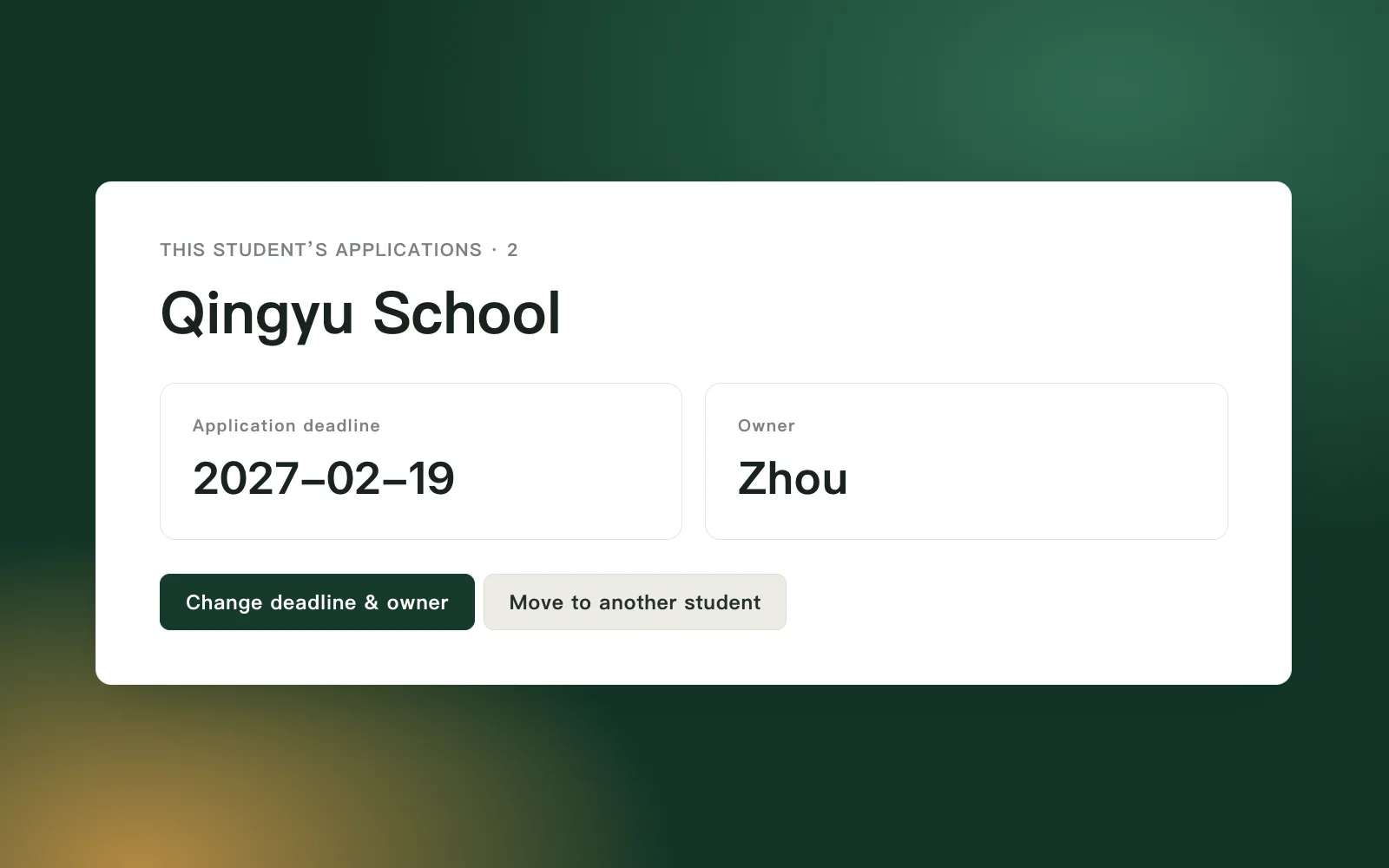
Ask the incoming colleague to open the selected student's school application and find the item on which the last update relied. The desktop example shows the selected school, follow-up person, deadline and material rows. Those details locate the work. If the last update quoted a school email, the colleague also needs the date and subject that lead to the original correspondence. A private folder name understood by only one adviser is a poor handover even when every document exists.
Keep the working material within the studio's agreed access arrangements. Passing cover to a colleague does not require copying the entire office's family records into a group chat. Identify the specific case and the evidence needed for the action. If the incoming adviser cannot appropriately access the evidence, arrange for the authorised person to handle that particular response. The family will get a more dependable answer than a colleague guessing from a fragment of a forwarded screenshot.
What happens when the school replies to the other person?
Agree who will watch the usual channel during cover and who will send the family update. A school may reply to the regular adviser directly even after the colleague has made a call. If both people see different parts of the exchange, establish where the latest confirmed change will be recorded. In a studio with two people, a deliberate sentence such as “I will contact the parent; please leave the message with me” can prevent duplicate advice without assuming any shared live editing.
Suppose admissions offers a different interview time while the parent is driving. The covering adviser can record the proposed slot and its reply deadline, then wait for the parent to confirm it works. If the usual adviser hears from the parent separately, the two colleagues reconcile the decision before either replies to the school. The interview invitation notes distinguish an offered alternative from an accepted booking. A school receiving one clear response is less likely to allocate two different slots to the same family.
Hand back only the changes that matter
At the end of cover, give the regular adviser a short account of what changed while they were away. A teacher replied, a school acknowledged a page, a parent chose an appointment or an expected reply never arrived. For each change, identify the source and the person who has already heard about it. If you promised another family update, name the time and the colleague who has accepted that commitment. “Back with the usual adviser” alone leaves a parent waiting.
Ask the returning adviser to take one typical parent question and answer it from the handback. If the colleague can explain that the report is on file, the reference is awaiting matching and the studio promised an update on Friday, the record has done its job. If the answer depends on a conversation only the covering adviser remembers, add the missing fact while both people are present. Use the parent update guide to convert that confirmed position into one message the family can use.
Make the final handback by school where one child has several applications. A callback to admissions about a reference and a callback to the parent about a separate appointment need different owners. Cover ends when each outstanding callback has a person and a time, and both colleagues know what the family was last told. The regular adviser can return to the next scheduled appointment without asking the parent to retell the day.