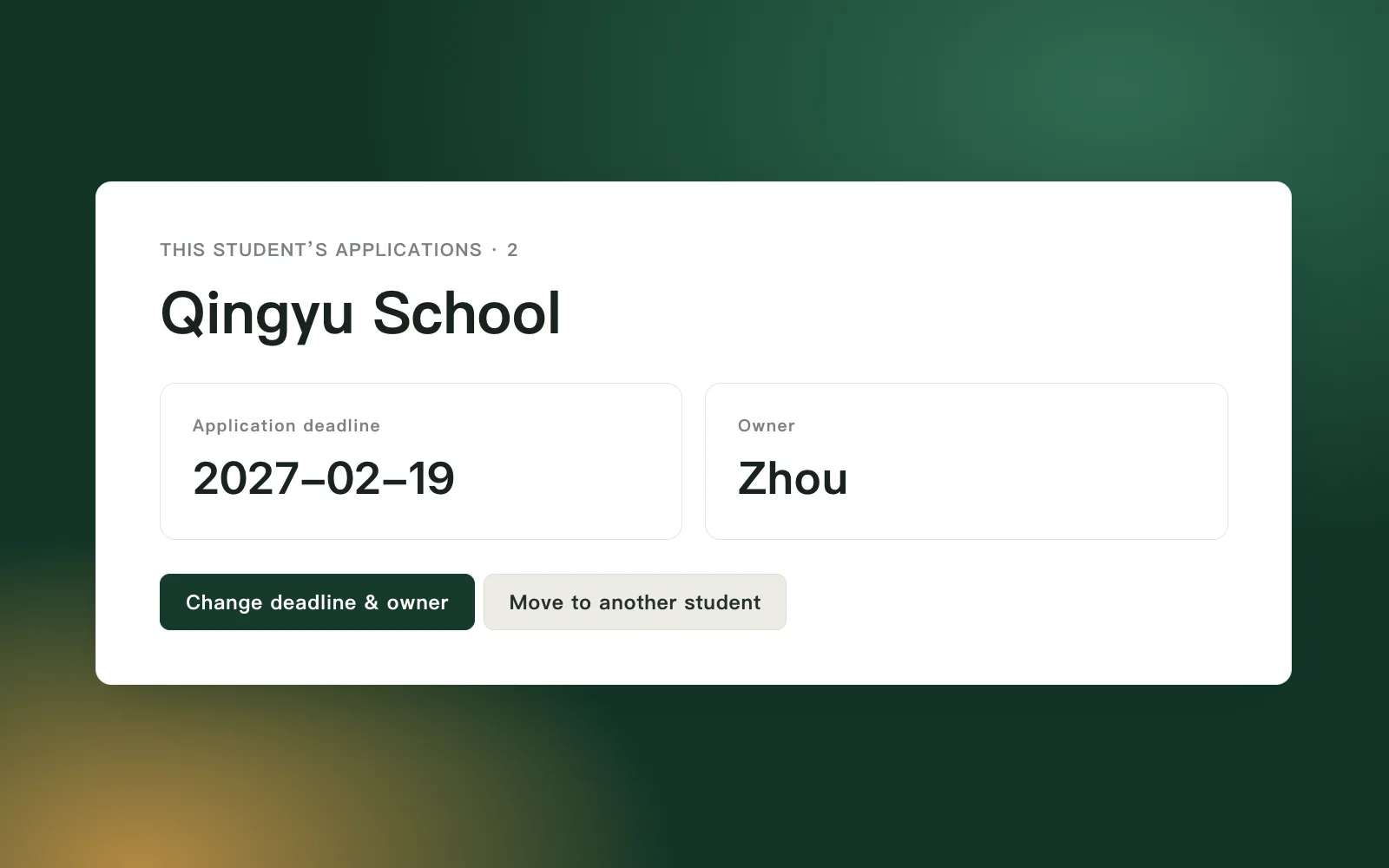
Extract the two clocks
A reply may be due this Friday for an interview next Tuesday. Tell the family when they must choose and when they must attend. For an overseas family, show the school time and their local time, including both dates.
Identify the attendees and place
Read who is invited. Ask before adding a parent to a student-only meeting. Copy the campus entrance or online joining instruction from this invitation, especially when siblings have appointments with different divisions.
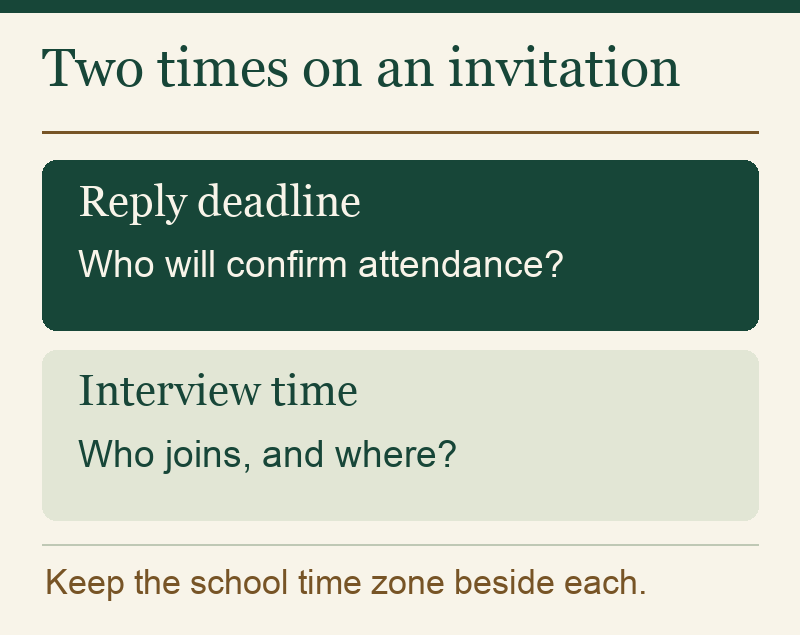
Offer workable alternatives
For a change request, identify the original slot, give the application reference and offer two specific alternatives with time zones. Keep the original booking in view until admissions confirms the replacement.
Write the day-of note
A useful note tells the student where to arrive or join, which materials the school requested and which contact to use if the route fails. Keep any private meeting link inside the family’s agreed communication channel.
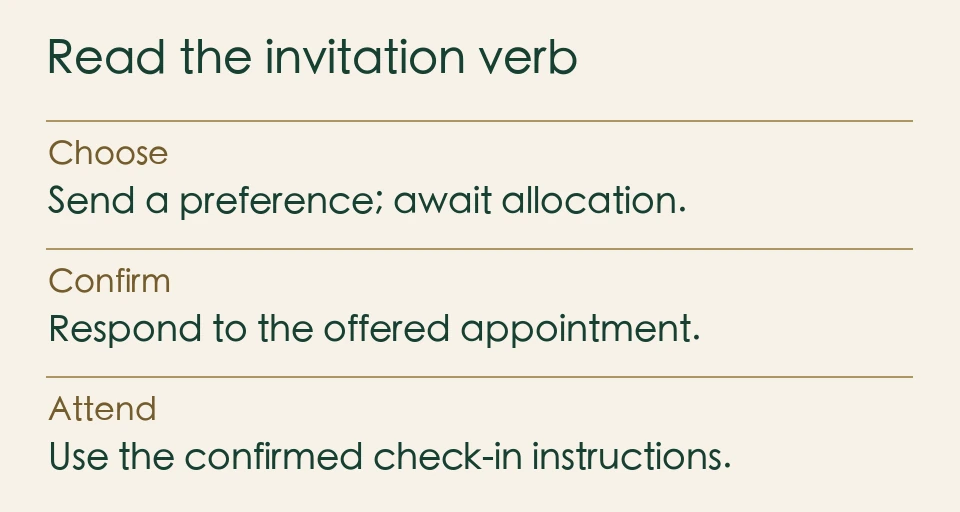
Read the verbs before telling a child they have an appointment
Look for the sentence that explains what the recipient must do. “Please indicate your preference” invites a selection and may leave the allocation with admissions. “Please confirm your attendance” usually refers to a proposed appointment awaiting a response. “Your appointment is confirmed” records an arrangement, although the message may still ask for a form or a visitor registration. Copy the wording that applies. When you call the parent, describe their actual decision: select, accept, register or simply prepare to attend.
Read any attachment and the line beneath the signature. A short email may say only that an invitation is attached. The attachment might distinguish a student assessment from a parent discussion and give a different start time for each. Check whether times refer to arrival, check-in, the interview itself or collection. A parent who plans to arrive at the scheduled start may miss a required reception check. A parent planning to collect when the interview ends may miss a separate briefing.
Ask what the family has already done. It may have followed a booking link before forwarding the email to you. Look for confirmation of the selection before booking or replying again. If the family picked a slot but saw no confirmation, contact the organiser to establish whether the selection was received. A second attempt might reserve a different slot or generate conflicting messages. Keep the original invitation and the latest acknowledgement together for that child.
Make the invitation usable by every attendee
Write down who the school addresses, who must participate and who is merely invited to accompany the student. If a guardian cannot attend, ask whether a different adult is acceptable rather than assuming the appointment can proceed unchanged. For siblings at the same school, one invitation may come from primary admissions and one from secondary. Give each child a separate arrival note even if the parent intends to make one journey. Read the names, buildings and collection instructions independently.
For an in-person visit, copy the entrance named in the invitation. A school's published mailing address may point to an administrative office on another street. Check visitor registration, any identification the school specifically asks visitors to bring, arrival time and where the accompanying adult should wait. If the child needs an accessible route or a quiet arrival arrangement, ask the family what they would like communicated and whom the school designates for that enquiry. Share only the details needed to arrange the visit.
For a remote meeting, find the joining method, display-name instructions if given, and the contact to use if the room does not open. Ask which device the student will actually have on the day. It may be a school-managed device on which the family cannot install a new application. Use any official test facility the organiser provides and ask about alternatives in advance. Keep the invitation within the intended group. Forwarding a private joining link to a wide planning chat can make it unclear who is supposed to attend.
Prepare for what the school actually requests
Separate things to bring, things to send ahead and things the school will provide. A request to bring a piece of recent work is different from a requirement to upload a portfolio before the meeting. Read any instructions on length, format or subject and ask the family which existing work best fits. The student should be able to talk about their own work. An adviser can help check that a requested item opens or is packed without creating the work or coaching the child to claim authorship.
Help the child understand the sequence in ordinary language. “We go to reception, a teacher takes you to the assessment, and I collect you where the invitation says” may be all a younger student needs. For an older student, agree which practical question they want to ask about the programme. If admissions has not described the assessment format, say that and ask for any preparation guidance it gives all applicants. Avoid presenting a rumoured test or someone else's old interview as the format for this intake.
Where the student is travelling or speaking a different language at home, check whether the invitation says anything about the language of the meeting. A parent may hope to interpret; a school may intend to assess the student's independent communication. Ask the organiser in advance who may assist and at which part of the meeting. The family then has time to arrange any support the school explicitly permits.
Change one booking without losing the other
Before requesting a change, identify the precise conflict. Is the student unavailable, the required adult unavailable or the journey between buildings impossible? Sometimes the student can attend as planned if admissions approves another adult. Sometimes a ten-minute difference in collection time solves the problem. Ask the parent what they can commit to before giving the school possible alternatives. Offer a small number of genuine windows and state whose local times you are quoting.
A message can read: “Thank you for the invitation for the named student's application. We can attend the assessment but the accompanying parent cannot reach the campus by the proposed check-in. Could you offer the later session that day or the following morning? Please tell us whether to retain the original slot while you check.” Record the organiser's answer and the exact appointment it supersedes. A change to one sibling's interview says nothing about the other child's schedule.
Fictional example: two entrances and a shared adult
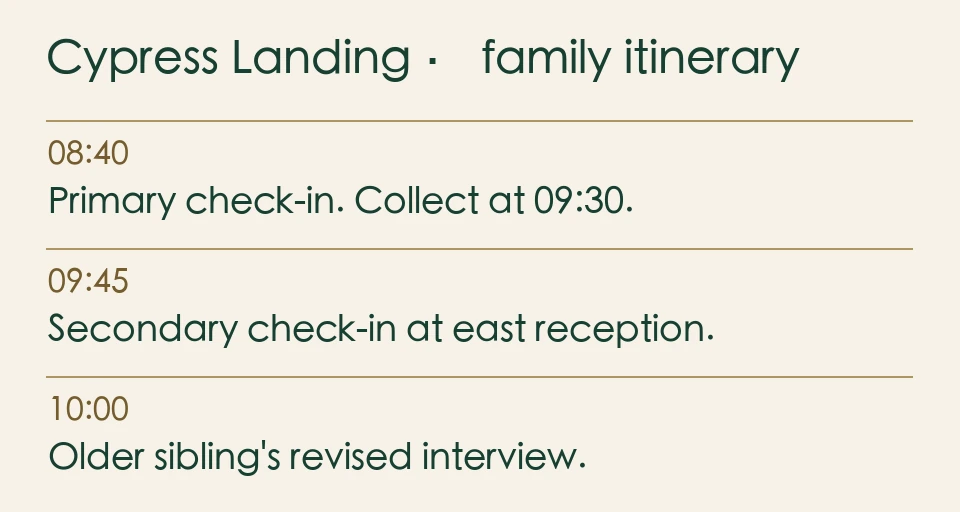
At fictional Cypress Landing, two siblings receive separate invitations. The younger child must check in at the primary gate at 08:40 with an adult and be collected there at 09:30. The older child has a secondary interview at 09:00 and may check in independently at the east reception. The family initially reads the messages as a single nine o'clock family visit. The adviser draws two lines, reads the check-in instructions aloud and asks whether the older student knows how to reach the separate reception.
The parent says the older child would prefer to arrive with an adult on this first visit. Walking between the gates after primary check-in would leave the family unsure of making the secondary reception time. The adviser asks secondary admissions whether a later interview is available. The primary appointment remains in place. Admissions offers 10:00 with a 09:45 check-in and requests confirmation by Thursday afternoon. The adviser checks whether the family can travel from the primary gate after collection and gives the parent the actual fifteen-minute interval to consider.
The family checks the route and confirms that the later session works. Secondary admissions acknowledges the change. The adviser sends two short lines: “Primary gate, 08:40 check-in, collect at 09:30” and “East reception, 09:45 check-in for the 10:00 secondary interview”. The original 09:00 message is kept as the superseded invitation. They agree who will carry each child's requested materials and which school contact to call if the primary collection runs late.
On the day, primary collection takes longer than expected. The parent calls the secondary contact using the number in the revised invitation. Staff direct them to the correct reception and confirm the student can still attend. Afterwards the adviser records that both children attended and that admissions will send any further requests separately. The family update reports attendance. No offer or assessment result has yet been communicated, so neither is recorded as an outcome.
After the meeting, capture what changed
Ask the family three questions while the details are fresh. Did every scheduled part take place? Did staff request a further document or conversation? Did anyone promise a date for the next communication? Separate a parent's impression of how the interview went from a statement issued by admissions. A child enjoying the visit is important to the family's choice, while a request for a report belongs on the school's active checklist.
If the student missed the appointment or could not join, record when they tried, which contact they reached and what the organiser said. Ask for the next available action without describing a replacement as confirmed until the invitation arrives. When there is a new date, update the application calendar and send a fresh day-of note to everyone participating. The family should be able to follow the latest instructions directly, without searching a long conversation to work out which time or entrance still applies.
For a student who attends without a parent, agree how the adult will learn about any new request. A child may remember being asked to bring another report but forget the date or delivery address. Thank the student for passing it on, then ask the organiser for the written instruction before ordering a document. Keep the student's account of the visit for the family's own discussion about fit.