Identify what the date controls
“Reply by Wednesday” and “interview on Friday” are separate commitments. Read the sentence around each date and attach the action to the correct school application.
Work back from the cutoff
A certified copy may take longer than the family expects. Find out when the issuing office can release it, then allow time for collection and review before the school's submission date.

Pin down the time zone
For a remote assessment, keep the original time and location from the invitation. Tell the family the equivalent local appointment, checking whether a conversion also changes the calendar day.
Handle an extension in writing
Save the school's response where the revised deadline can be checked. A request awaiting a decision still leaves the original cutoff in force. Adjust the follow-up plan once the new date is confirmed.

A morning call about two different dates
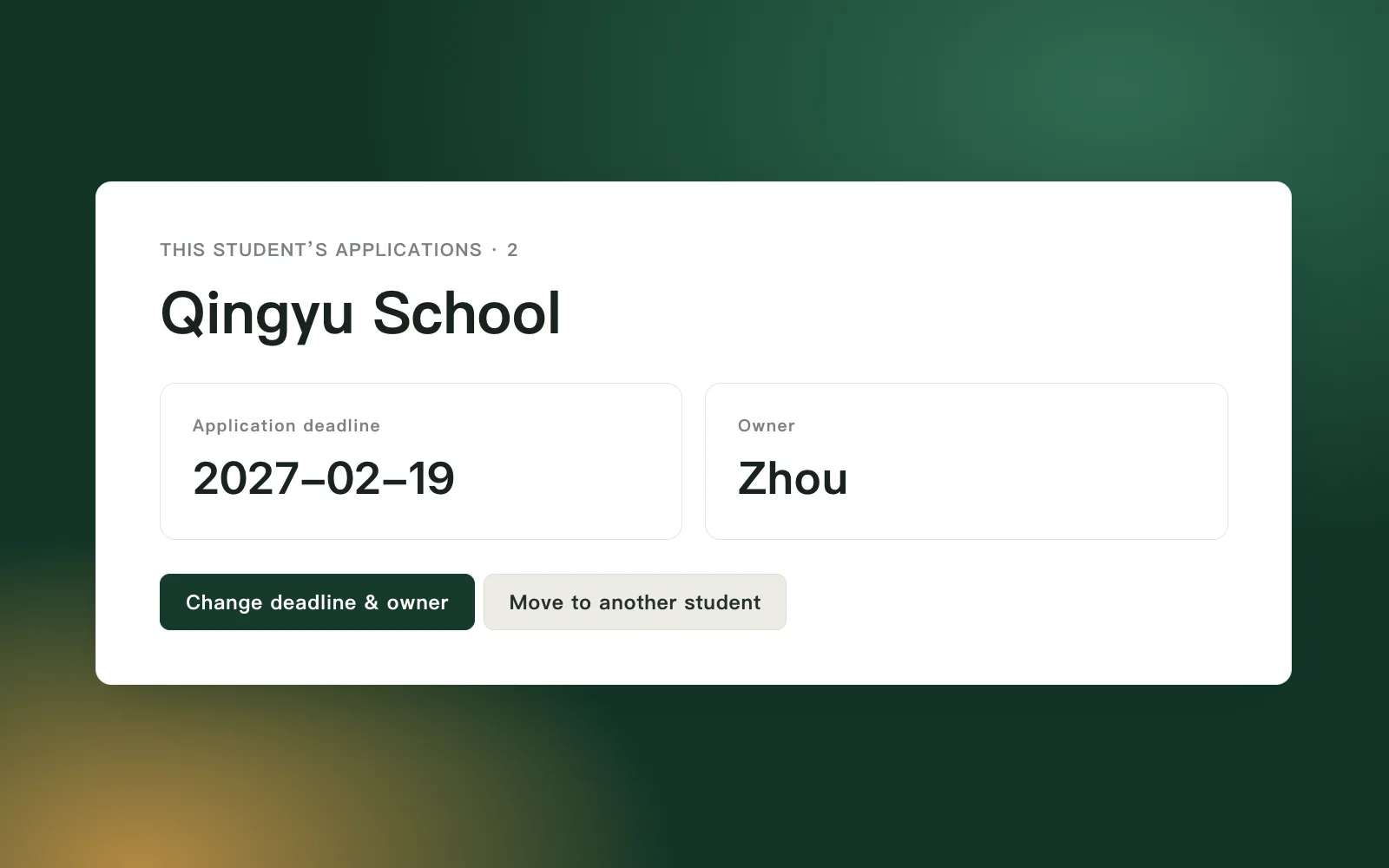
A parent has written the application's final date in their diary and plans to send a translation the day before. Open the selected school and read the date beside the application heading, then read the date beside the outstanding material. The desktop example shows an application due on 19 February and a translation due on 11 February. Both dates belong to the same application. Waiting until the eighteenth would miss the earlier material requirement even though the family had remembered the main deadline correctly.
Give the parent the two actions in order. First arrange the translation to satisfy the material date; then check what remains for the complete application before its final date. The adviser named beside the application is the person responsible for following up. The person who produces the translation or signs the application may be someone else. State that difference in the call so the family knows whether it needs to do something today or wait for an answer from the adviser.
Read the source before adjusting the workspace
The date in the workspace needs to correspond to a particular school instruction. Reopen the email, portal notice or offer letter that created the deadline and read the verb attached to it. Does the school need a reply, a received file, a completed payment or attendance at an event? An adviser who remembers only the number on the calendar cannot tell whether sending a message on that day will satisfy the requirement.
The desktop illustration shows an action for adjusting the application date and follow-up person. Use the correct school's record when the school sends a change. Check the scope of the change before editing. A message extending the time to send a translation may affect the material item alone. A change to the main application date may still leave an interview reply due tomorrow. Read the separate entries again after the change so the family gets the right instructions.

Build a working sequence around the fixed date
Take the translation in the example. The issuing school must supply a readable report, the family may need to engage a translator acceptable to admissions and someone must compare the translation with the correct original. Ask which of those steps has already happened. If the original is missing a page, obtaining the page is the first action. The transcript checks can identify an incomplete report before a translator spends time on the wrong file.
Now agree a follow-up point with the person doing the first step. “I will check with the registrar on Tuesday morning if the new page has not reached the family” is a workable commitment. It belongs in the adviser's own plan. Tell the family which date the school set and which earlier date you chose to allow time for the next step. If the family misses the internal target, establish what can still be done before declaring the school deadline missed.
When an application crosses time zones, retain the school’s original time and establish the family’s location on the action date. A travelling parent may be in a different city when a reply falls due. A date with no stated hour deserves a question to admissions if the difference matters. The calendar guide shows how to write two local dates when a conversion crosses midnight. Use that detail in the family message even if the short date in the workspace remains the first thing you see.
Pass responsibility with the evidence, not just the date
Before a colleague covers the file, give them the instruction that supports the most urgent item and a practical next call. “Translation due on the eleventh; parent requested the corrected original on Monday; check with the parent Wednesday morning before contacting the translator.” A colleague can act on that note. Without the middle fact they might chase the translator for work that has yet to begin.
If the colleague obtains a new deadline, ask them to record the source, the exact item covered and who has heard about the change. One parent may already have arranged time off work to collect a document. Changing a date internally does not inform that parent. A brief confirmation through the agreed family channel can avoid a wasted journey. When the regular adviser returns, check the record against the most recent school message before making another chase.
At day's end, distinguish elapsed from finished
Review today's most urgent school and material dates and ask what evidence closes each one. A sent form can be followed by a submission acknowledgement. A document marked received in the local checklist can still need delivery through a school's specified channel. If nobody has been able to verify a result, name the office to contact next. Moving the date forward simply to clear today's list would conceal the actual state of the application.
Give the family an update that includes the first action it owns, the time it has and who will check afterwards. If the school has granted extra time, specify the document or reply the extension covers. If it has not replied, say when the adviser will ask again. The working day ends with an accountable next step for each live deadline and an explanation the family can use without reading the adviser's entire calendar.