Preserve the wording of the deadline
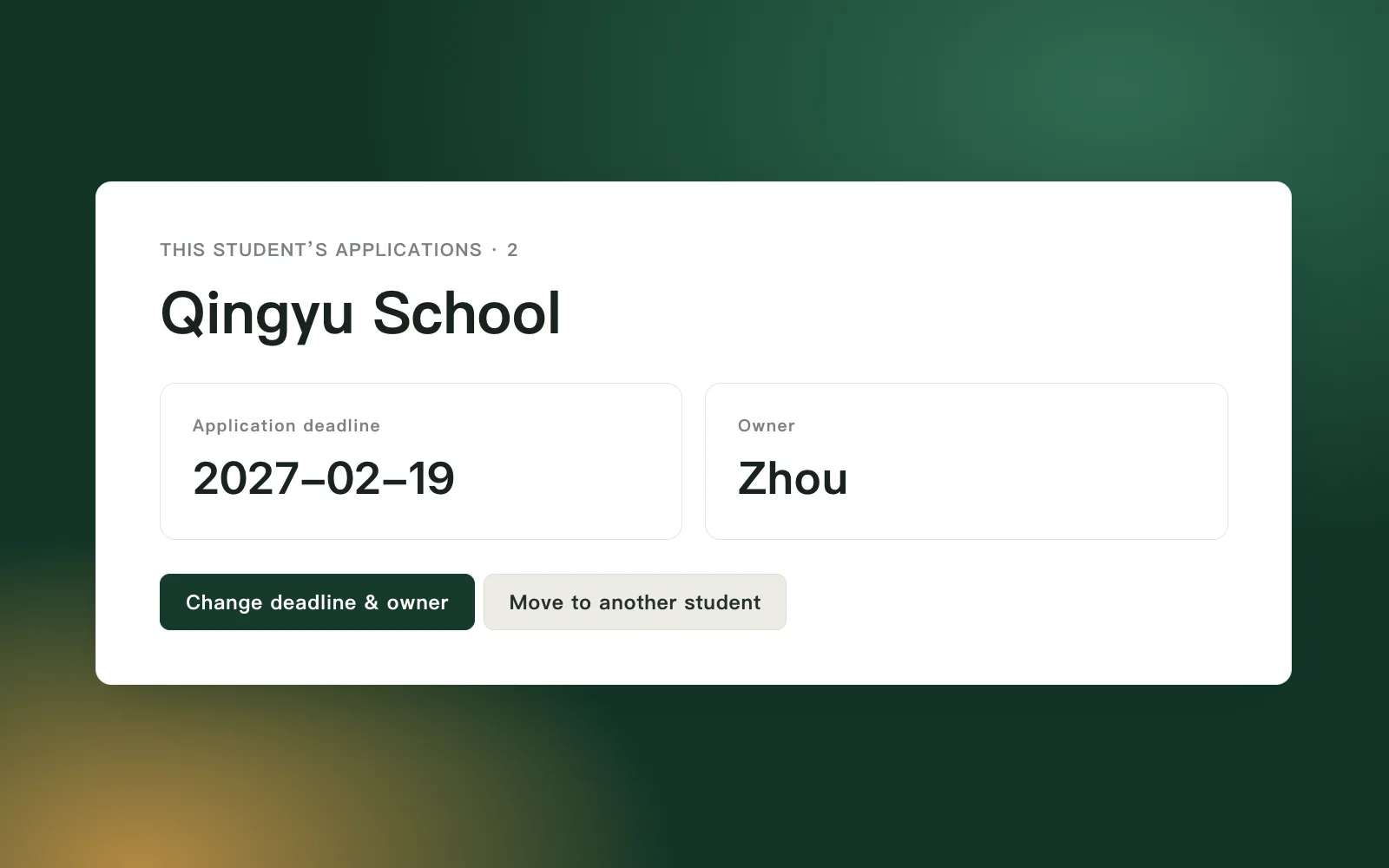
Save the date, clock time and zone exactly as shown in the invitation or portal. If only a date appears, ask whether a time applies. An assumed midnight cut-off can be hours away from the actual closing time.
Work back from third-party tasks
A teacher writes a reference and the registrar issues a report. The adviser can check the invitation or request the document. Give those follow-ups their own calendar entries rather than moving the published school date forward.
Translate for the person who must act
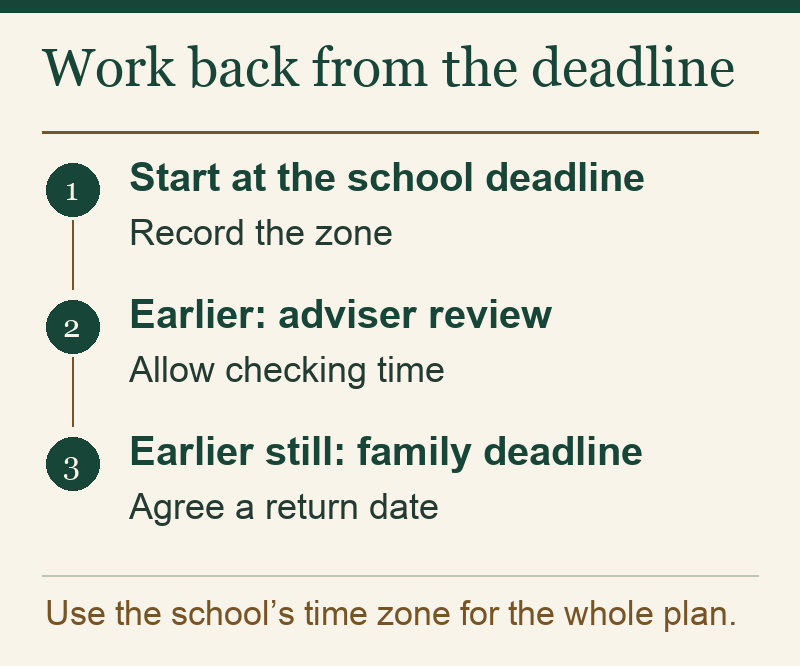
Put both school time and family time on an overseas interview appointment. Include the day of the week and the date on both sides of a midnight crossing. Recheck the conversion for the actual interview date if either location changes clocks.
Log a revised date against its task
Keep the original notice when admissions grants an extension. Identify the document or appointment it covers. A new interview slot does not automatically extend the deadline for a transcript or an offer reply.
Give the date a verb before you put it on a calendar
Read the sentence around every date in the school message. Is it the day applications open, the last time to reply, the day to attend an appointment or the day admissions expects to release a decision? An application opening on Monday creates an opportunity to start. An interview invitation expiring on Monday creates a decision that can be lost. Separating the verbs makes the dates useful even before you decide how many reminders to set.
When a message contains more than one action, write each on its own line. An offer may ask the parent to sign a response by Thursday, transfer a payment by Friday and present original documents on arrival. Someone returning the signature on Thursday has met one requirement. They still need a plan for the money and the originals. Keep the line-specific evidence too: a sent acceptance, a payment acknowledgement and an appointment for document inspection answer different questions when a parent calls.
Include the intended student, school and campus even in a one-family calendar. A child applying to two campuses can acquire two similar interview invitations in a morning. Put enough information in each title that the owner can recognise it on a small phone screen. “Reply to West Campus interview invitation” is a better title than “Urgent school date”. Put the source subject, date and responsible person in the detail. Keep private family information out of a calendar shared more widely than the case record.
Build backward from the last action a person can control
Start at the external deadline and ask what must be true immediately before that event. If the parent must upload a signed form, the family needs the correct version, someone authorised to sign, a chance to read it and a working way to submit it. Work backwards until you reach the first action that can happen today. Agree a follow-up point with the owner. Give it an explicit label such as “Adviser checks whether parent has the current form”. If the family meets that internal check, the school still expects the signed submission.
Decide whose working hours matter. A document due on Monday morning might have to leave the previous school's office on Friday because no registrar will be present over the weekend. Find out when that particular office is open and what it can commit to. Avoid assigning a standard number of buffer days to every school. An unsigned form in the family's possession and an official record held by another institution have quite different dependencies.
Where you depend on another person's reply, schedule a check that has a purpose. “Thursday morning, see whether admissions has answered the alternative referee question; if unanswered, call the named office” tells the covering colleague what to do. Five generic reminders on Thursday just reproduce the same unresolved problem five times. The reference guide can help identify whether the next enquiry belongs with the teacher or with the person matching documents at the receiving school.
Convert times for the date and location of the action
Write the original wording first. If the school uses an abbreviation you cannot interpret confidently, ask for the local city or its offset on the relevant date. A family travelling between now and the appointment may be in a different time zone on interview day. Ask where the student and any required adult will actually be when they join. If they will be in different places, give each person their own conversion.
Use the appointment date when converting. A difference observed today need not apply on a date when one location has changed its clocks. Read the result back with both dates and weekdays visible. A school appointment just after midnight can fall on the previous evening for the family. Check the invitation again after adding it to a phone calendar; some calendar attachments already apply the device's time zone. Manually subtracting the difference a second time can shift a correct entry.
For a deadline specified only as a date, preserve that level of precision. Tell the family you are checking the closing time, and agree an earlier practical hand-in time if appropriate. Explain whose choice that earlier time is. If the school confirms a specific hour later, update the external line, then reconsider the internal steps. A calendar entry at the beginning of a day is sometimes a display convenience and cannot serve as evidence that the school closes at that hour.
Fictional example: a Monday deadline that required work on Friday
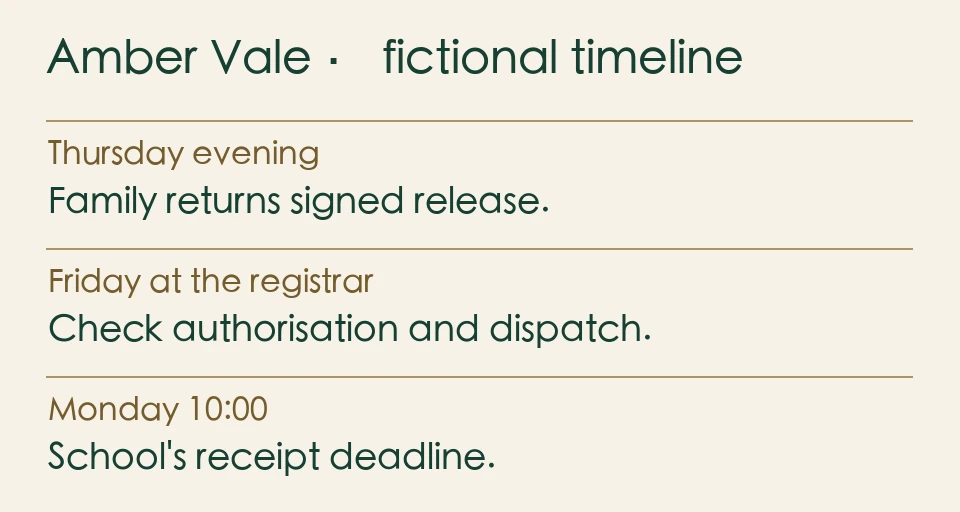
At fictional Amber Vale School the registrar must send a record by Monday 10:00 school time. The family is also holding an invitation from fictional Brook Lantern for a Tuesday interview. Its reply deadline is Friday 16:00 Brook Lantern time. The offices in this example both use the same time as the family. The adviser has a Thursday afternoon call with the parent and will be away on Friday morning.
The adviser discovers that the previous school's registrar processes requests only on working days and needs a signed release before sending the record. The family agrees to return the release by Thursday evening. The registrar agrees to check it Friday morning and send the document by Friday afternoon. The calendar now has a Thursday family commitment, a Friday check for the covering adviser and the original Monday school deadline. Calling Friday the submission deadline would misrepresent what Amber Vale actually wrote.
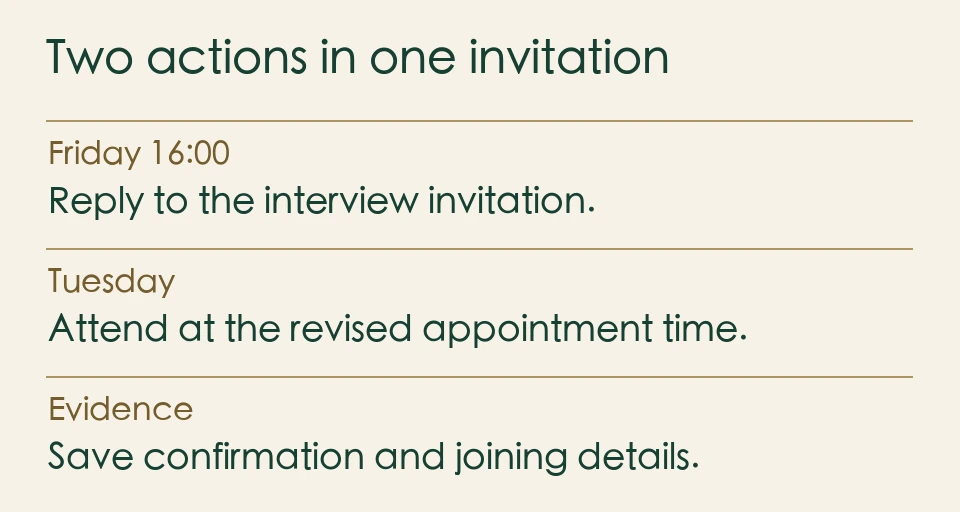
Brook Lantern's invitation asks the family to choose an interview slot. The child is free on Tuesday but the required adult has a work meeting. During Thursday's call the parent asks for a later slot. The adviser contacts admissions and keeps the Friday reply deadline visible. Asking for a different slot has not extended the reply window. The note for Friday cover says to check the response and call the family before accepting any alternative.
On Friday morning Brook Lantern offers a later Tuesday appointment and asks the family to confirm by the same Friday 16:00 cut-off. The covering colleague confirms availability with the parent, sends the reply and records the school's acknowledgement. The interview itself remains on Tuesday's calendar. That afternoon the registrar confirms dispatch to Amber Vale. The colleague records the dispatch and sets a Monday receipt check. The two schools have now reached different states even though both required work on Friday.
On Monday Amber Vale confirms receipt. The adviser removes the pending chase and keeps the confirmation with the application. At Tuesday's interview check-in the family uses the new Brook Lantern appointment. In the parent update, the adviser can account for each result without implying that the interview acceptance settled the transcript deadline. If the registrar had failed to dispatch on Friday, the same calendar would have identified who needed to speak to Amber Vale before Monday's cut-off.
Resolve a collision by asking what can actually move
Two entries overlapping on a screen may have very different consequences. A family can sometimes send a reply earlier in the day while leaving an interview fixed. A school office may be able to offer another appointment but have no discretion over a payment deadline. Read the actions before asking for an extension. Ask the family which arrangement it can actually honour, then approach the office responsible for the specific change.
A change request can read: “We can attend the assessment but the time overlaps the student's final class at their current school. Are either of these two windows available? Please confirm whether the existing reply deadline still applies while we await your answer.” Hold the original slot and deadline in the record until the school answers. When the revised time is agreed, tell every participant who received the original invitation, including a covering adviser if they have already planned the day's calls.
Close the line with evidence of the right event
At the end of the day, sort today's entries into completed actions, pending responses and events that have merely passed. If an invitation expired with no reply, write the outcome and ask admissions what options remain. Moving the overdue entry to tomorrow without explanation conceals the very issue the family needs help with. Where someone reports sending a document, retain the next receipt check until the receiving school confirms its status.
Before a colleague takes over, read them three entries and ask what they would do if nobody called back. They should be able to locate the source, name the next actor and distinguish the family's chosen buffer from the school's actual limit. For an offer response, check the signature and payment dates independently. Then write the next family update time into your own diary. That last commitment belongs to you even when no school has promised an answer by then.