
Identify the decision on the page
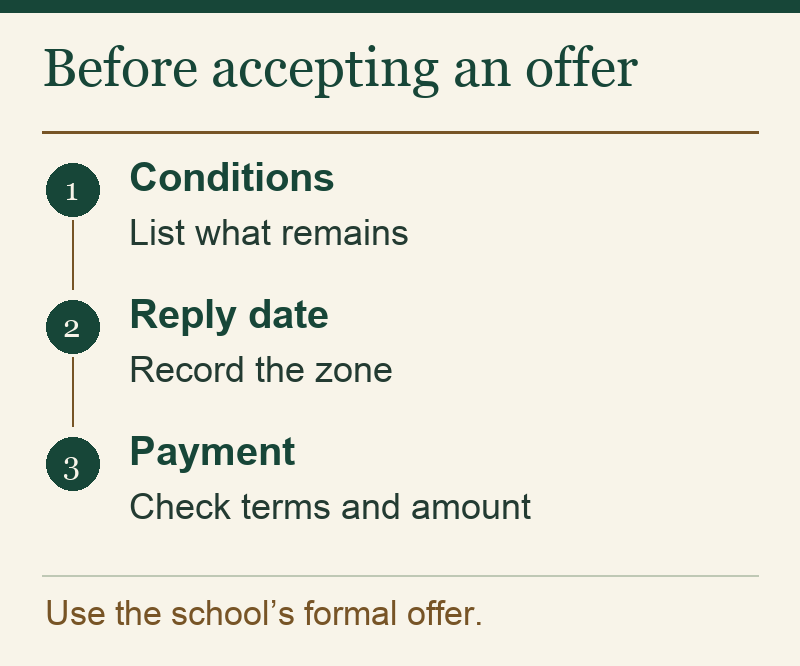
A confirmed place, a conditional offer and a pool notification call for different responses. Verify the intake and programme. Translate each outstanding condition into the evidence the school wants and the date it expects it.
Map acceptance to its evidence
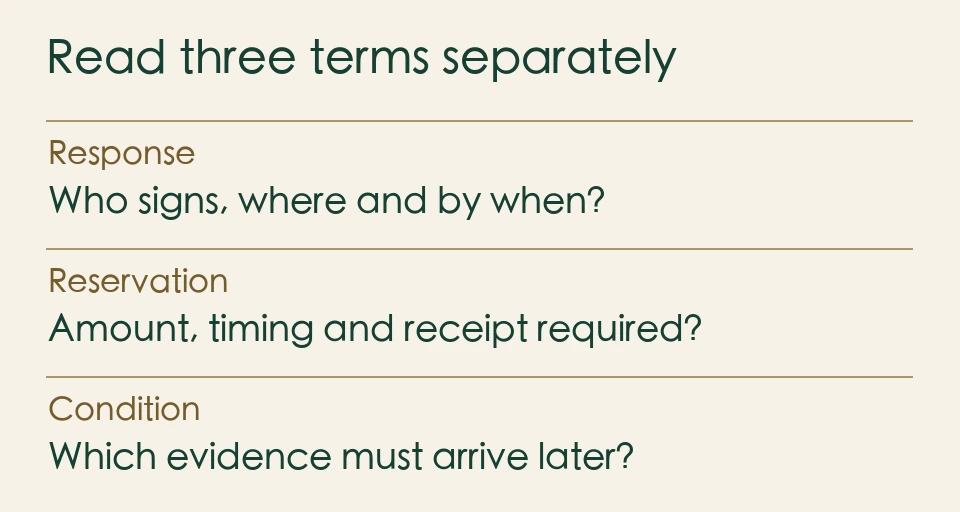
Find the reply route, the required signature and any payment the school says secures the place. Ask about unclear refund or deferral terms in writing. The family makes the decision; retain the evidence of the choice it authorises.
Before a parent replies, read back who signs, when the reply is due, where it goes, whether a payment secures the place, and what evidence of acceptance the school will issue. Turn any blank into a specific question for the admissions office.
Handle another school’s timetable
Set the offer expiry beside the expected date of the other decision. If they conflict, ask whether the first school can extend its response period and by how much. Keep the published deadline in force until a written extension comes back.
Switch from application to arrival
Once acceptance is acknowledged, record the receipt and identify the enrolment instructions in the letter. A first-day arrival time, a health form and a payment receipt each have different owners. Give the family the next actionable item.
Read the offer with the application beside it
Open the actual offer and compare the student, campus, programme, entry year and start term with the application the family submitted. A school may be offering an alternative campus or a later start after a discussion with admissions. That may still suit the family, but it changes the decision. Ask whether the transport, curriculum and timing assumptions behind the original shortlist still hold for the place described in the letter.
Read the first page and any conditions on subsequent pages before calling the parent. An enthusiastic opening can precede a requirement for a final report, an assessment or an additional document. Copy each condition in the school’s words, then explain its practical effect. If an item has no stated deadline, ask when the school needs it. If it has no clear acceptance criterion, ask who will confirm it has been met. An adviser can help organise evidence, but the receiving school decides whether the evidence satisfies its condition.
Be precise about a waitlist or pool. The school may ask the family to confirm it wishes to remain under consideration. That response can have its own deadline and may be worth making, but it does not place the child in a class. Tell the parent which decision is open today and whether another offer remains available. Do not withdraw live applications merely because a family has received encouraging language from its preferred school.
Build a response sheet from the letter itself
Use one row for the family's decision and another for the mechanics of communicating it. In the first record whether the family wants to accept, decline, seek an extension or obtain clarification. In the second record the school’s authorised route: a signed form, portal response or reply to a named office, as the letter specifies. Add the person who must sign and what evidence the school will provide. A parent texting “yes” to the adviser establishes an intention; the school may still need a particular declaration.
Make a third row for payment if the offer mentions one. Copy the amount, currency, purpose, deadline and the source of the instructions. Is the deadline for initiating payment or for the funds to arrive? Where instructions are unclear or unexpectedly different, ask the school finance office through an established official contact before the family acts. Record the school’s clarification without circulating bank details in a general case update. Handle the proof of payment through the agreed channel.
Read what the letter says about a refund, credit or deferral. A seat reservation amount may count towards tuition or may carry conditions distinct from a security deposit. Identify the exact paragraph and leave disputed points for the school to answer. The family can then use a first-year cost comparison that reflects the actual offer rather than a preliminary estimate. If a material term is unclear, give the parent the written question and the time available for an answer.
Use the competing school's dates without guessing its decision
Put the current offer's expiry first. Beside it, write the other school's last confirmed statement: an assessment appointment, an estimated decision period or a promise of a reply by a specific date. An appointment next week does not mean an offer will arrive next week. Compare the known dates and point out where the family may have to decide without having all the results. Ask what outcome it would be willing to accept if the second school remains silent.
If the family wants more time, approach the school that issued the offer. “Thank you for the offer for the stated campus and intake. The family is reviewing the arrangements and would appreciate until the proposed date to respond. Could you confirm whether an extension is available and whether it would also apply to the deposit deadline?” Name the items separately. A school could extend the signature deadline but retain another date, or set new conditions for the extension.
While waiting, tell the family the current decision point remains on the calendar. Agree who will contact them if no written reply arrives before their own practical cut-off. A covering colleague should know whether the family has authorised a specific response or still wants to decide personally. If there is no family decision, the colleague can chase clarification and report the time remaining; they cannot choose a school for the child.
Fictional example: the signature moved but the deposit did not
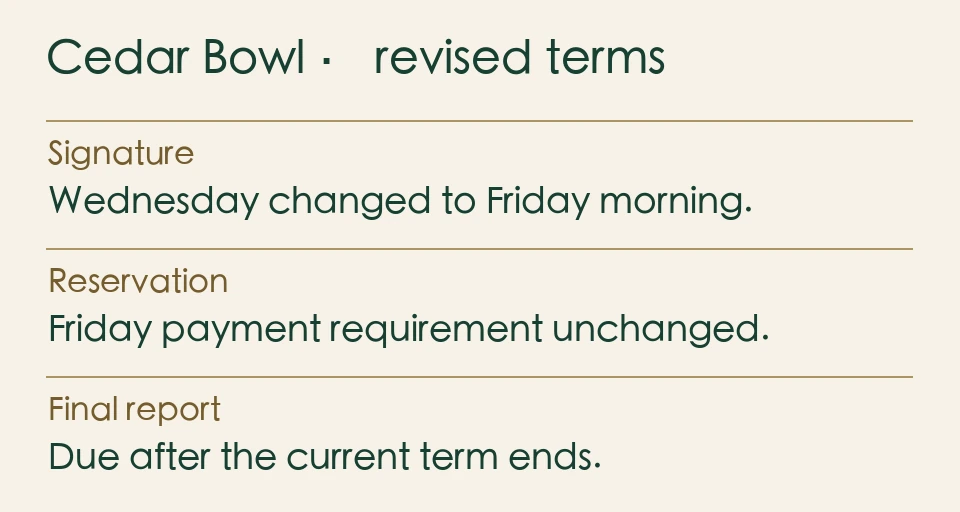
Fictional Cedar Bowl School offers conditional September entry at its east campus. It asks the family to sign by Wednesday and arrange a reservation payment by Friday. A final report is due after the current term finishes. The same child is awaiting an assessment at fictional Hill Stile next Thursday. The family prefers to see the Hill Stile result before committing and asks whether the adviser can “hold Cedar Bowl for a week”.
The adviser first confirms that east campus is acceptable. The original enquiry included two campuses and the journey is different. Next, the adviser explains that Hill Stile has offered an assessment appointment, with no decision date confirmed. The family asks the adviser to enquire about an extension at Cedar Bowl. The enquiry names the signature and payment dates separately and requests written confirmation of how the place would be secured.
Cedar Bowl replies that it can accept the signed response on Friday morning but the Friday payment requirement is unchanged. Hill Stile confirms only that its assessment remains on the following Thursday. The adviser places the two replies in front of the family. The parent decides to accept Cedar Bowl after reviewing the conditions and the reservation terms. The parent signs through the school’s specified route, and the family follows the confirmed payment instructions. Neither action is recorded as complete until its evidence is available.
Cedar Bowl acknowledges the signature first. The adviser records that the payment has been initiated and asks finance how receipt will be confirmed. Later the school confirms the reservation has been credited and the final report remains outstanding. The parent update says: “East campus has recorded your signed response and the reservation. Please ask the current school for the final report when the term ends. I will check the submission route with admissions before then.” The conditional item is still visible after the excitement of securing the place.
The family then asks what to do about Hill Stile. The adviser points out the existing assessment appointment and asks for a separate instruction. With the family's decision to withdraw, the adviser follows Hill Stile’s stated cancellation route and saves its acknowledgement. Acceptance at one school did not itself cancel an appointment at the other. The note now gives a clear outcome for both schools and a named owner for the outstanding report.
If the family declines, defers or changes its mind
A decline may need a specific response in the same portal used to accept. Confirm the family’s instruction, identify the correct offer and use the school’s stated route. Retain any acknowledgement, then check whether interview appointments or outstanding referee requests require separate cancellation. Tell the family what has been closed. A declined place at one campus need not be interpreted as a decision on every programme or every sibling's application.
For a possible deferral, ask whether the school allows it for this intake and what happens to the place, conditions and any funds already paid. A parent moving later may be able to enquire about a new intake without cancelling an existing place immediately. Let the school describe its options in writing and the family choose between them. Keep the original offer terms available until a replacement arrangement is confirmed; changing a date in your own diary cannot change the school's agreement.
Turn the acceptance acknowledgement into a first arrival plan
Read the school's acknowledgement alongside the still-open conditions. Which instruction applies before the student can start? Who can produce the remaining document? When will the school issue arrival details? Create one first action for the family and one for the adviser only where an action actually exists. If the school says it will send an enrolment pack later, agree when to look for it instead of filling the gap with assumed requirements.
Finish with a plain spoken check: “The place is for this campus and term. The school has acknowledged these actions. This condition remains open. The next date belongs to this person.” If one answer is missing, return to the letter or ask the appropriate office before giving a definitive update. The family can now distinguish its own decision, the school's confirmation, the money committed and the practical work still needed for the child to arrive.