
Prepare one question before the call
Read the last piece of evidence from the target school. Identify the decision the parent can make today, such as approving an assessment time or obtaining an original report from the current school.
A note for the next appointment
- Family decision
- Ask School A whether it accepts mid-year entry.
- Adviser action
- Confirm a visit with the family after admissions replies in writing.
Revisit the shortlist when priorities shift
A change of commute or preferred entry term can invalidate a previous recommendation. Check the particular campus and intake again before suggesting that the family reuse an earlier application pack.
Write down the agreement while it is fresh
Name the person doing the work and what will count as completion. “Parent requests a sealed copy on Thursday” gives the next call a clearer starting point than “transcript discussed”.
Answer an interruption accurately
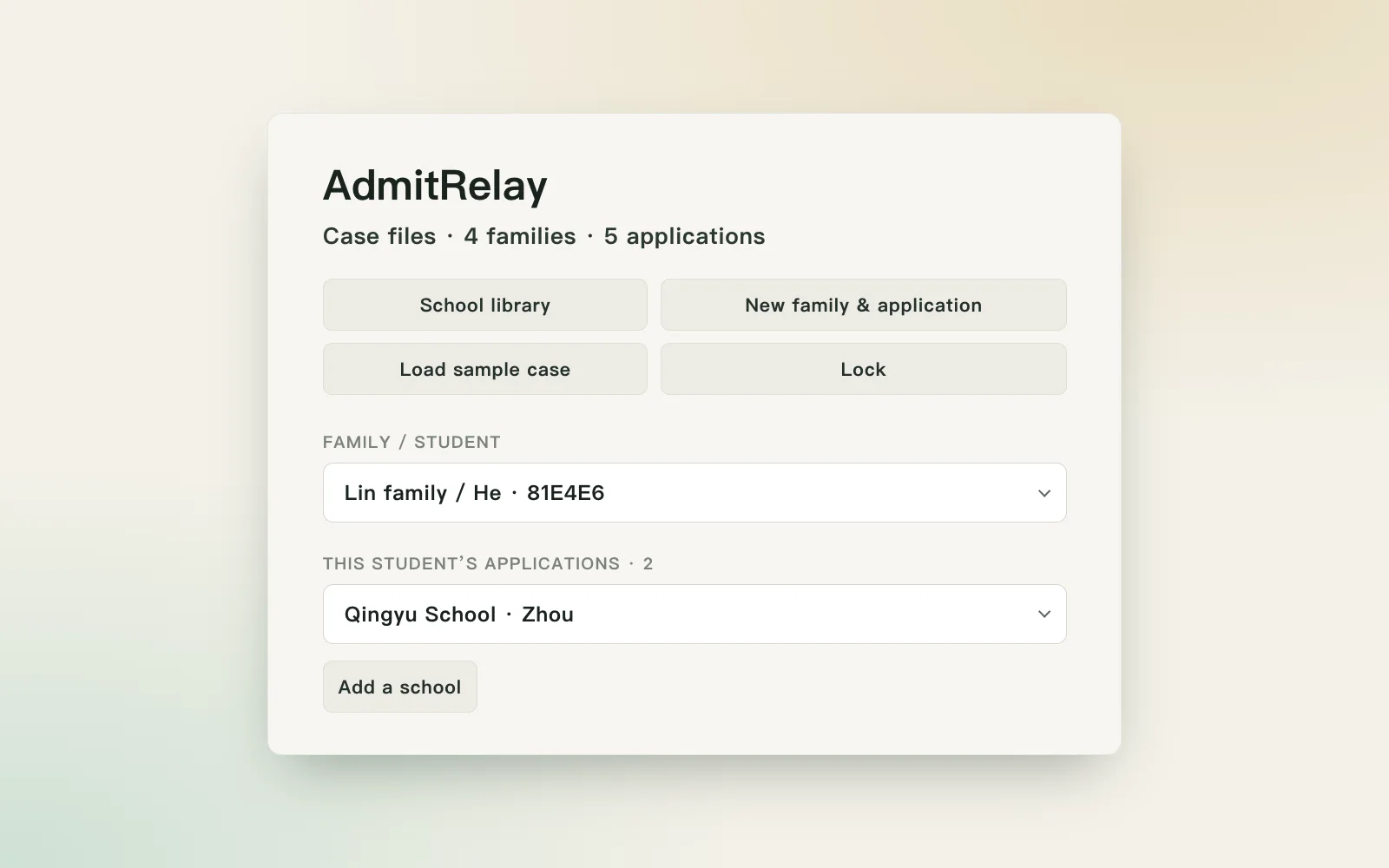
If a message arrives between appointments, open that student's record before replying. Use the latest school acknowledgement and a definite date for the next follow-up to give the family a dependable update.
Before the first appointment, prepare a question rather than a presentation
With no colleague filtering incoming messages, an independent adviser can spend the first half of the morning rereading yesterday's conversations. Choose the family you are about to see, open the student and relevant school, and read the last thing you promised that parent. Then look for the evidence that changes the answer. You may need only a school reply confirming an entry year, or a report showing which term the child completed. Bring that evidence and the one decision it supports into the appointment.
Suppose a parent has an earlier shortlist on their phone and wants to visit this week. Check whether the family is still moving in the same month and whether its housing area has changed. If a new address makes the bus route impractical, the immediate question is whether to keep that campus on the list. There is little point using the meeting to discuss uniforms or application essays. The first consultation notes can help reconstruct the condition that led you to suggest the campus originally.
Use the five minutes between calls to leave a starting point
At the end of the appointment, write the family decision in the language the parent used, the source you still need and the date you agreed to reply. Read it back while the parent is present. “You can consider the farther campus if the late bus reaches your stop. I will ask transport about that route on Thursday.” This sentence sets a useful limit on the research and gives your next call a beginning. An entry that simply says “transport discussed” will make you reconstruct the entire decision later.
Record facts with the right student and school before changing to the next family. If a parent hands you an academic report during a call about two siblings, check the name and period inside it. If both schools may use it, find out what each requires before marking either material complete. The student file lets you return to the child's context; each school's checklist tells you the particular question still to resolve. This short pause protects the quality of the next appointment as well as the current one.

A message arrives while you are with someone else
A parent sends “Do I need to pay today?” while you are in another meeting. A quick answer from memory could attach another school's terms to this family's offer. Acknowledge the question and give a time when you can check the actual letter. When you return to the case, identify the school, the charge and the deadline. A reservation amount, an application fee and an instalment can have different dates even on the same application. Ask for the relevant notice if the parent has forwarded only a cropped figure.
Reply in proportion to the evidence. If the school confirms that a signature is due today and the payment is due later, tell the parent the signature action first. If the payment deadline is unclear, contact the designated office and tell the parent when you will return with an answer. The offer response guide can help you read the signature and payment instructions separately. A precise reply after a short check is more useful to a busy parent than an immediate guess.
Protect the research time you promised
Reserve a part of the day for questions that genuinely need school evidence. Choose one unresolved issue per family and identify who can settle it. A general marketing brochure is unlikely to answer whether a particular year can join a laboratory class at a named campus. Contact the division responsible or locate the relevant subject guide. Record the heading, its year and the date you checked it. If you get only a referral to another office, keep the question open and move it to the right contact.
When the family changes its mind, decide which research can be reused. A later start date may leave the commute unchanged but make the earlier fee schedule or placement advice inapplicable. Check the affected sources and explain the change to the parent in one sentence. You do not have to research an entire city again just because one family assumption has changed, but you do need to revisit the facts that depended on it.
Close the desk without leaving the family guessing
Before finishing, compare the messages you promised with the messages actually sent. A parent who expected to hear on Friday should hear even if admissions has yet to reply. Explain the last confirmed fact, the outstanding question and when you will check again. If the parent has no action, say so. If you need one signature or one decision, put that request at the start and name the school. The parent update guide includes wording for a school still matching a reference.
Finally, leave yourself an opening line for tomorrow. “Check for the transport office's reply before calling the parent about a visit” gives you an immediate task when the phone rings. Keep sensitive documents in their agreed local location and share only the information this family needs. Independent practice works best when your record carries enough of the conversation that you can give the next family your full attention, then return to the first one without asking them to repeat their story.