
Confirm how the school collects it
Read the reference instruction for the particular intake. A portal may invite the teacher at their professional address, or admissions may ask for a direct email. Verify the name and address with the family before entering either.
Send the teacher a useful heads-up
Give the school name, the expected sender of the invitation and the due date. Offer a simple next step if the invitation does not arrive. Never ask the teacher to forward a private portal link so the adviser can complete it.
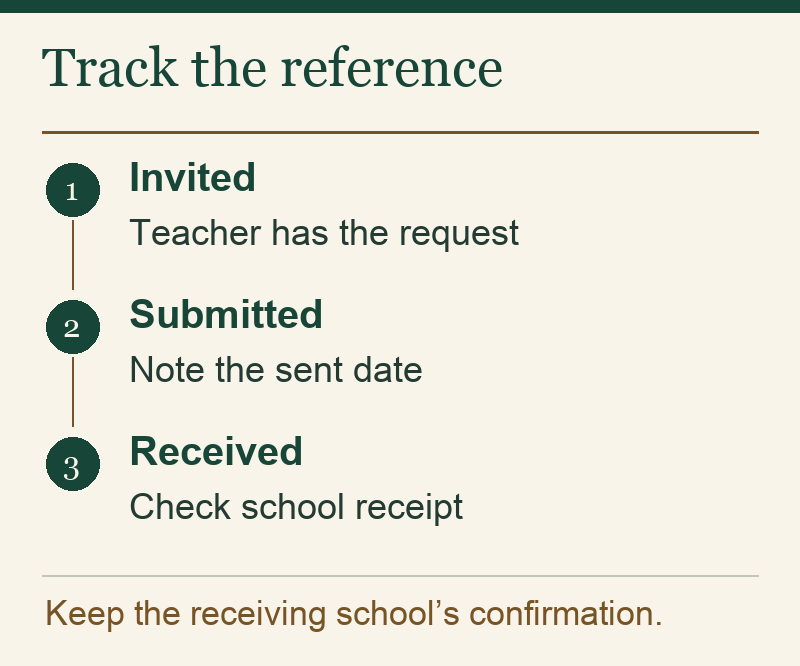
Keep three milestones distinct
An invitation timestamp proves the request went out. A teacher’s reply can show they submitted it. A receipt or portal update shows the school has matched it to the case. Keep the date and source beside each milestone.
Resolve a missing acknowledgement
If the teacher has sent the reference but the dashboard still shows a gap, ask admissions to trace it using the application reference and submission date. Request a fresh invitation only after checking which link the teacher should use.
Work out who is eligible before anyone receives an invitation
Read the exact instruction beside the reference item. A school requesting the current class teacher may mean someone different from a subject teacher, a tutor or a principal. Look for any rule about how recently the person must have taught the child. If the student changed schools last month, the current teacher may know very little about them. Ask admissions whether it wants the current teacher, a teacher from the previous school or both. Give the family a specific answer before they spend goodwill on the wrong request.
Find out how the current school handles outgoing references. A teacher who is happy to contribute might still have to send the request through a school office. Ask the parent to identify the appropriate contact and confirm consent for this particular receiving school. Two applications create two destinations. Permission to introduce a referee for one does not tell you which address or format the other school requires. Keep each set of instructions in its own school checklist.
Write down the official deadline and check what action must occur by that time. A deadline for naming a referee can be different from a deadline for the completed reference to arrive. If the school quotes a time, retain its time zone. If it gives a date alone and the exact closing hour matters to the teacher's schedule, ask admissions to clarify. Give the teacher a realistic working window that accounts for their own school day and any closure the family knows about.
Ask the teacher a question they can decline or clarify
A first message can be brief. “The family is applying for entry to the named campus and the school requests a reference from the student's current class teacher. Would you be the right person, and would you be able to respond through the school's invitation by the date below? If your office coordinates these requests, please let us know the appropriate route.” Send the child's identifying details through the agreed channel and include only what the teacher needs to identify the student.
Do not attach a model endorsement or tell the teacher what judgement to make. If they ask for background, give factual information such as the entry term, the target school's requested format and how to find the invitation. The content belongs to the person supplying it. A teacher declining because they have taught the child only briefly is important information. Ask admissions for an acceptable alternative and tell the family why a different referee is being sought without putting pressure on the original teacher.
Once the teacher agrees, read back the professional address and check it against the contact the teacher or their office supplied. A small spelling error can send an invitation containing student information to the wrong person. If you discover the error after sending, contact the receiving school through its official channel and ask it to withdraw or correct the invitation. Confirm which invitation is valid before telling the teacher to begin. Repeatedly pressing resend can make a simple correction much harder to trace.
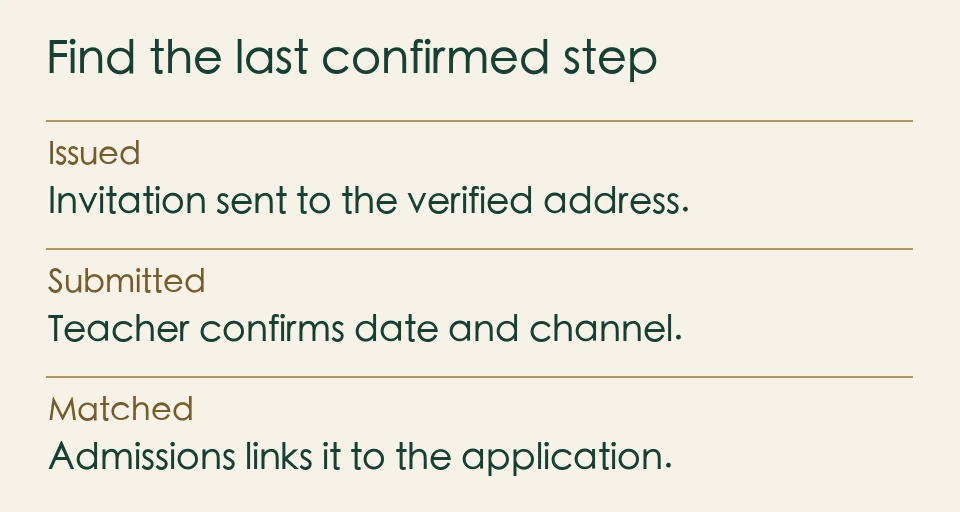
Locate the last confirmed step when a request stalls
Start with what someone can verify. If the application contains a referee name but shows no invitation event, check the steps required to initiate the request. Some forms require the applicant to finish another section first. Use that school's instructions rather than inferring that a saved address generated an email. Once the invitation has been issued, give the teacher the expected sender, school name and date, so they can check their professional inbox and filtered mail without sharing access to either.
If the teacher finds the invitation but the link has expired, ask admissions about a replacement and whether anything entered on the old form carries over. Give the teacher only the route confirmed by admissions. A forwarded private link would put someone else inside a process intended for the referee. An adviser can coordinate a fresh invitation without opening it, completing it or seeing what the teacher wrote.
If the teacher says the form went through, ask for the date, channel and any non-confidential confirmation the teacher is comfortable describing. A request for status should never require the letter itself. Check whether the admissions office has matched the submission to the application. When a teacher used a different professional email address from the one on the invitation, mention that fact to admissions with permission so it can trace the submission. Do not ask the teacher to write it all again before the office has looked.
Use three different messages for three different recipients
For the family: “The invitation has been sent to the agreed referee. I will check for a status update on Wednesday. Please leave the teacher to reply through the school channel. I will contact you if admissions needs a different person or additional consent.” This gives the family something concrete to expect without encouraging a second set of reminders from the parent.
For the teacher after an agreed check date: “I am checking whether the invitation for this application reached you and whether the route works. If you have already submitted, the date and channel are enough for us to trace receipt. Thank you for helping us avoid asking you twice.” A teacher who is still writing can give a realistic date. Set a reminder that respects that answer while keeping the school's actual deadline visible.
For admissions after reported dispatch: “Our referee reports submitting through the invitation on Tuesday afternoon. The application still lists a reference outstanding. Could you check whether it has been matched to this application and tell us whether you need any action from the referee?” Include the application reference and minimum identifying information through the approved channel. A response that processing is ongoing means the next check belongs with admissions unless it asks the teacher to act again.
Fictional example: a teacher moving between campuses
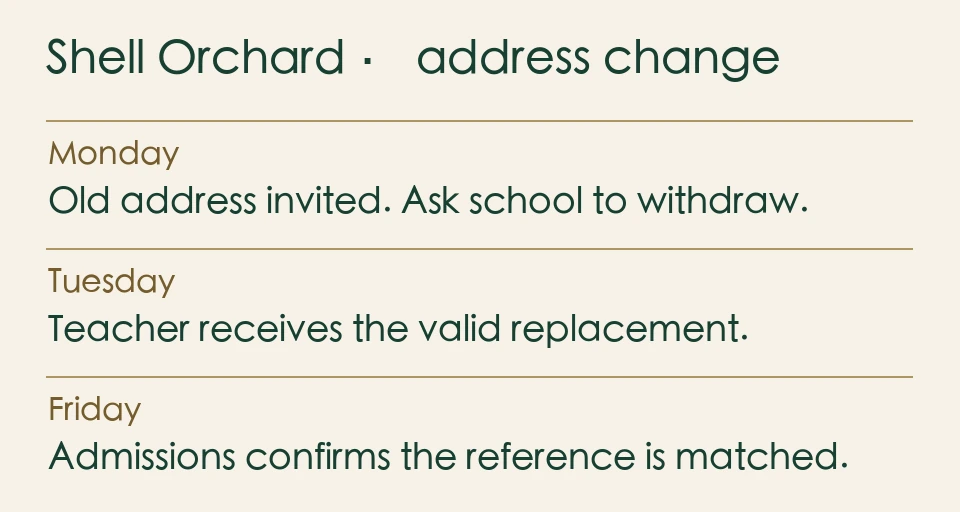
At fictional Birch Bridge School a family nominates the student's science teacher for an application to fictional Shell Orchard. Shell Orchard accepts a current subject teacher and requires a private invitation. The teacher agrees, then explains that their school moved them to another campus and their professional email address has changed. The family has already entered the old address. The adviser checks the application's invitation status and finds that the request was issued on Monday.
The adviser asks Shell Orchard to withdraw the old invitation and use the professional address confirmed by the teacher. Admissions replies on Tuesday that a new invitation has been issued and that only the new one should be used. The adviser tells the teacher the expected sender and date. The teacher finds the invitation and agrees to submit by Thursday morning. The family receives a short update saying the contact issue is resolved and the reference is with the teacher.
On Thursday the teacher reports completing the form. The family's checklist still shows the item outstanding. The adviser records the teacher's confirmation and asks Shell Orchard to trace it using the application reference and Thursday's submission time. Admissions explains that the reference was received and is waiting to be associated with the corrected address. The adviser agrees to check on Friday afternoon and leaves the teacher out of the administrative follow-up.
On Friday Shell Orchard confirms the item is linked to the application and no further referee action is required. The adviser closes the item and tells the family the school has confirmed receipt. The family never received the confidential text and the teacher completed only one form. The note preserves the reason for the changed address, which invitation was valid and the final school response. A colleague can now answer a family call without reopening the confidential process.
What to do if the school deadline arrives first
If the reference will be late, tell admissions which step has been reached and ask whether it can accept the reference separately from the rest of the application. The school might specify a new deadline, accept another referee or require the file to remain incomplete. Record the response using its own wording. An invitation still open on screen is not evidence that admissions has granted an extension. Keep the original deadline visible until a revised arrangement is confirmed.
Close the loop with the right person. If the school agrees to a later date, let the teacher know the confirmed date and remind the family when you will check again. If it accepts an alternative referee, check whether the original invitation should be cancelled before issuing another. Where the family withdraws the application, notify those still preparing material through the agreed contacts. The work is complete when the receiving school has given a traceable outcome or the family has closed the application and no teacher is still working under an obsolete request.